Emergency Roof Tarping Indianapolis IN
Heavy-duty 10-mil poly tarping with perimeter timber battens, rafter anchor screws, ridge wraps, and immediate storm barrier protection across Indianapolis and Marion County.
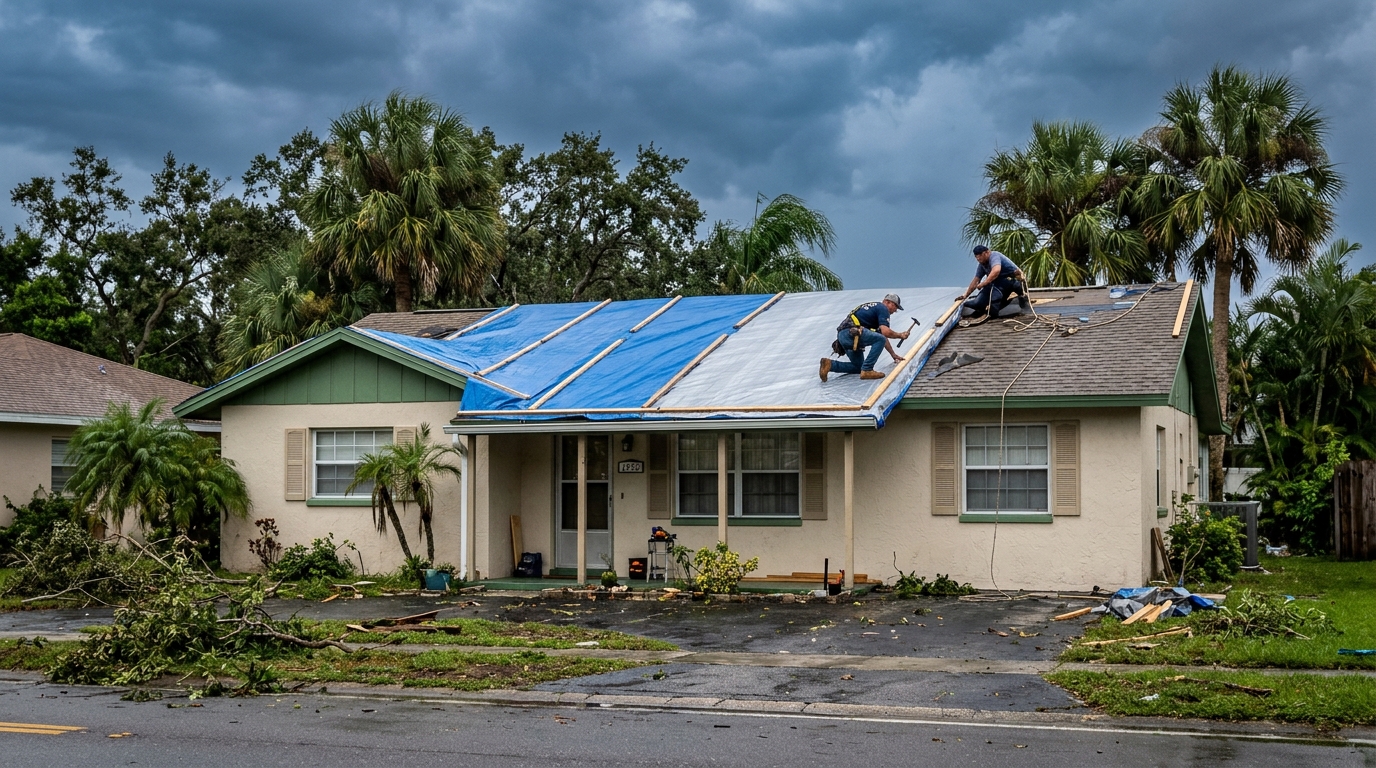
When severe Midwest convective squalls, fallen hardwood oak branches, or tornado-force winds breach residential roofing structures in Indianapolis, exposed attic interiors face immediate water saturation. Substandard amateur tarping using thin plastic and bricks invariably tears loose during secondary gusts, creating thousands of dollars in secondary structural damage. Roof Expert USA coordinates 24/7 heavy-duty emergency roof tarping dispatch across Indianapolis and Marion County, utilizing engineered 10-mil woven poly membranes, timber battens, and rafter anchor screws.
Engineering Specialty: Post-Storm Timber-Batten Securing
Standard consumer tarps held down by rocks, sandbags, or unsealed staples fail during subsequent storm squalls because negative pressure creates powerful aerodynamic suction. When wind gusts enter beneath an unsecured tarp edge, they inflate the membrane like a parachute, tearing loose fasteners and violently ripping shingles off the deck.
Post-storm timber-batten securing provides an engineered, storm-resistant seal. Dispatched professional crews utilize heavy-duty 10-mil woven polyethylene tarps with UV coatings. The tarp edges are wrapped twice around kiln-dried 2x4 dimensional spruce lumber battens. These timber battens are mechanically fastened directly through the shingle courses into structural rafters using 3.5-inch coated framing screws with neoprene washers. The upper boundary is pulled smoothly over the roof ridge cap to prevent water running under the top seam. This creates an airtight, watertight structural shield capable of withstanding 65+ mph wind gusts until permanent rebuilds are permitted.
Engineered Tarping & Stabilization Standards
Tree Limb Puncture Shoring
When heavy fallen oak or maple branches puncture roof decking, crews safely remove branch debris, trim splintered OSB, and fasten 5/8-inch CDX plywood bridging over rafter voids prior to tarping.
Over-the-Ridge Continuous Wrapping
Technicians extend the upper edge of the tarp over the roof peak and secure it on the opposing leeward slope, ensuring driving rain cannot penetrate beneath the top horizontal seam.
Structural Rafter Screw Anchoring
Perimeter timber battens are screwed directly into structural roof rafters—not just flimsy plywood decking—to resist high negative-pressure uplift during secondary thunderstorm squalls.
Waterproof Underlayment Flashing
For complex valleys and dormers, self-adhering SBS modified bitumen membranes are layered under the tarp to seal irregular roof planes against water backflow.
Why Timber-Batten Tarping Is Critical for Insurance Claims
Under almost all Indiana homeowner insurance policies, property owners have a strict legal duty to mitigate secondary damage following a storm loss. If a property owner leaves a breached roof open to subsequent rain, insurance adjusters may deny claims for secondary interior drywall, flooring, and mold damage. Professional timber-batten tarping provides verifiable proof of timely mitigation, complete with date-stamped contractor documentation for your adjuster.
Frequently Asked Questions
How long does a professional timber-batten roof tarp last? +
A properly installed 10-mil poly tarp secured with double-wrapped 2x4 lumber battens and rafter screws can reliably protect a home for 60 to 90 days, providing ample time for insurance adjustment, material procurement, and permanent replacement.
Will emergency tarping damage my existing shingles? +
Professional roofers place timber battens strategically to minimize shingle damage, fastening directly into structural rafters and sealing screw penetrations. Any minor fastener holes are incorporated into the permanent repair scope.
Is emergency roof tarping covered by homeowner insurance in Indiana? +
Yes. Emergency mitigation services, including timber-batten roof tarping, tree debris removal, and dry-in stabilization, are typically 100% reimbursable under the emergency mitigation clause of standard homeowner insurance policies.